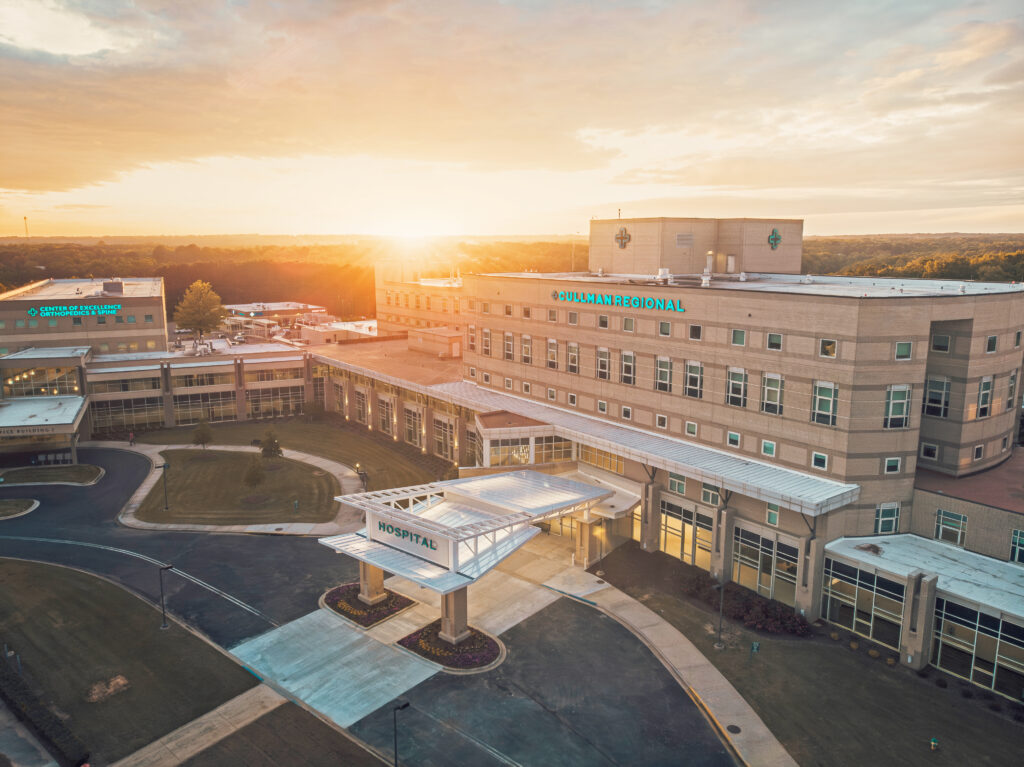
Cullman Regional is Leading Healthcare in Rural Alabama
A look at the impact of Alabama’s largest independent rural hospital
Cullman Regional is leading rural healthcare in Alabama with unmatched, diverse, and far-reaching impacts. This includes creating 725 new jobs, saving 350 lives through its sepsis initiative, investing $165 million in capital projects, expanding NICU and maternity care in rural communities, and delivering $400 million in annual economic impact for the community.
After finding the right formula to operate a successful and growing rural hospital, Cullman Regional is positioned to pursue excellence and compete with urban health systems for local patients, giving patients more healthcare choice. It also means the hospital is uniquely qualified to assist other community hospitals looking for similar success. With two concurrent paths of impact, Cullman Regional continues to defy conventional rural health expectations.
SAVING LIVES
Applying clinical best practices at a hospital is self-evident, but it requires collaborative and well-coordinated effort across disciplines. With priority on teamwork, Cullman Regional executes its sepsis initiative so effectively it is consistently listed in the CMS Top 10% Performance rankings and has saved more than 350 lives to date.
At any given time, the hospital is actively pursuing multiple quality initiatives that result in high quality healthcare delivered at the local level. By using clinical best practices and benchmarking itself to other high achieving hospitals, Cullman Regional has demonstrated the value of prioritizing quality care.
ACTION TO IMPROVE MATERNITY CARE ACCESS
When hospitals throughout Alabama were closing maternity programs, Cullman Regional went hard the other direction and opened a Neonatal ICU (NICU). While the financial challenges of providing maternity and NICU care still exist, the hospital is steadfast in its commitment to sustain maternity and NICU care. In fact, Cullman Regional will expand its maternity program again after being awarded a $3.8 million grant by the Alabama Rural Health Transformation Program (RHTP) to establish a Graduate Medical Education (GME) program.
Reflective of Cullman Regional’s creative problem solving, the hospital’s new family medicine GME program will feature a focused obstetrics track. Medical residents will train to deliver babies and provide prenatal and postpartum care in addition to primary care. This program distinction directly addresses the lack of obstetric clinicians in the state and will put maternity care in counties currently designated as maternity care deserts.
COMMUNITY HOSPITAL ADVOCACY AND ASSISTANCE
With more than 50 rural hospitals in Alabama, bold moves are needed to sustain the services and care they provide. In January 2026, Cullman Regional started a grassroots advocacy effort by establishing Alabama Alliance for Community Hospitals (AACH) to add resources in the state for small, community hospitals including rural hospitals.
With a focus on building relationships in the first year, AACH and its member hospitals held two events, bringing hospital leaders and state leaders together to examine specific challenges and possible solutions. Additionally, widespread concerns among rural hospital leaders led to an aggressive advertising campaign to promote the idea that RHTP funds should go directly to rural hospitals.
Outside of funding opportunities, struggling community hospitals need specific strategies to help them overcome the challenges of rising healthcare delivery costs, low reimbursement, and quality improvement. In September 2026, Cullman Regional launched an outreach program to help Alabama’s community hospitals be more successful. Through consulting and management services, the program intends to assist hospitals with adding more local care, creating jobs, and enhancing quality.
STATE ENGAGEMENT AND LENDING LEADERSHIP
The dilemma of sustaining rural healthcare is the topic of many state level conversations and efforts. Including perspectives from the front lines of rural healthcare is essential to accurately assess causation and develop meaningful and sustainable solutions. Cullman Regional CEO James Clements participates on several state and regional committees, all of which are seeking ways to improve healthcare in Alabama.
As a member of the Statewide Health Coordinating Council, Clements helps to review and develop the Alabama State Health Plan as well as advises the State Health Planning and Development Agency on matters relating to health planning and resource development. He also serves on the BCBS Alabama Board of Directors and is a member of Vizient Southern States, which is the nation’s largest member-owned healthcare performance improvement company.
In 2025, Clements was appointed by Senate President Pro Tem Garlan Gudger (R-Cullman) to serve on the Alabama Rural Roadmap Initiative. The initiative, formed during the 2025 legislative session under Gudger’s leadership, is designed to develop strategies that support growth and development in Alabama’s rural communities.
By lending leadership through state-level engagement and through the hospital’s newly launched management and consulting services, Cullman Regional is leveraging lessons learned and extensive experience for the benefit of all Alabama’s community hospitals.
LOCAL AND STATEWIDE IMPACT
Cullman Regional’s continued growth in clinical areas that address specific community health needs means patients receive the care they need locally. The hospital’s commitment to high quality care means patients can trust their local community hospital to care for them and their families. The economic impact and job creation at Cullman Regional means more opportunity for more people in central North Alabama. The hospital’s engagement with the state and other community hospitals means more perspectives and more resources are available to improve healthcare in Alabama.
The combined impact of all these efforts remains to be seen, but it’s clear that Alabama’s largest independent rural hospital is working diligently to help change the trajectory of community healthcare in the state.